Table Of Content
- The Culmination: A Symphony of Efficiency and Innovation
- Your delivery or shipping methods
- Warehouse receiving and stowing
- Warehouse Setup & Design Guide: Expert Warehouse Layout Tips
- Key Considerations in Inventory Assessment
- Create zones and implement zone picking or wave picking
- Top Factors to Consider While Designing Your Warehouse Layout

By implementing ergonomic equipment and techniques into your warehouse design, you can ensure that your workers are as safe and productive as possible. The ABC method of inventory classification is one of the most effective inventory management systems. It is designed to minimize time spent in the warehouse, reduce motion waste and maximize customer satisfaction. But all of this depends on having a strong foundation of the fundamentals of warehouse layout best practices. Without that foundation, no amount of technology will be able to make up for poor planning and execution. Your warehouse space is part of your supply chain, meaning that it has a direct impact on its speed and efficiency.
A Unique Location and Flawless Layout Made This Iconic Design District Home Sell In A Second - CandysDirt.com - CandysDirt.com
A Unique Location and Flawless Layout Made This Iconic Design District Home Sell In A Second - CandysDirt.com.
Posted: Sun, 11 Feb 2024 08:00:00 GMT [source]
The Culmination: A Symphony of Efficiency and Innovation
Besides layout design, choosing the right warehouse location can also significantly enhance your ability to compete and effectively serve customers. Check out the 7 critical criteria you must consider while choosing a warehouse to properly plan and understand the most strategic location for your warehouse. For warehouses with multiple rooms or alcoves, you can get a bird’s eye view of the floorplan so you can easily visualize the space while considering the layout. You can also manipulate your 3D model in what’s called a “dollhouse” view to explore it from any rotation.
Your delivery or shipping methods
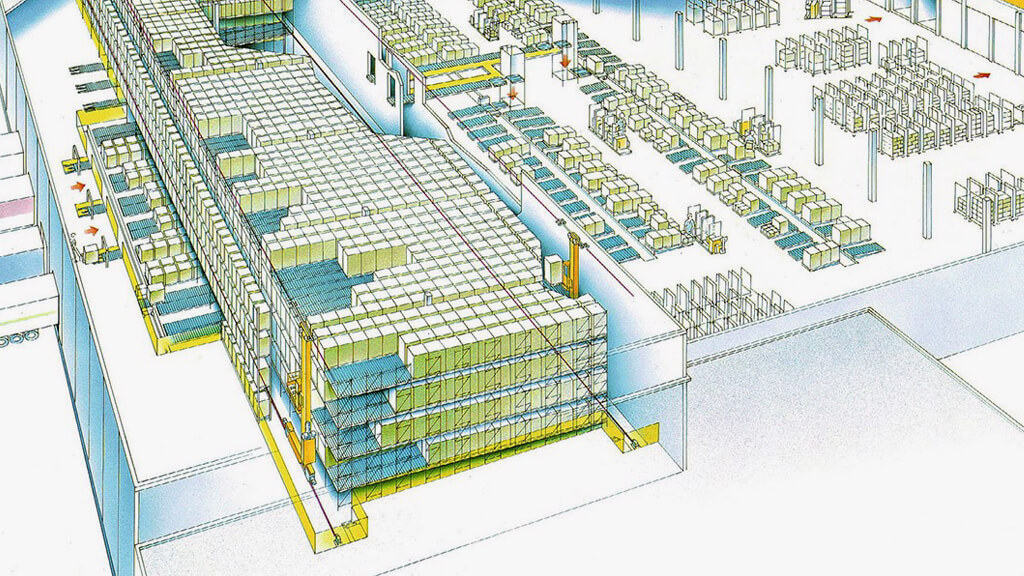
The loading process starts by placing one or more units at the entrance to the vehicle, which are then pushed in by a second group that takes the place previously occupied by the first group. In this way the loads accumulate, one after another, until the trailer of the truck has been filled. Modular ramps are metal structures with a non-slip surface which can either be fixed (when the trucks used are all of the same height) or mobile (when using vehicles of different heights). Mechanical or hydraulic devices can be used to deal with these height differences. Join tens of thousands of ecommerce brands to get more articles like this and our latest resources delivered to your inbox. Our WMS also acts as a control center to compile all distribution metrics, including fulfillment performance and shipping insights, across all elements of our fulfillment centers.
Warehouse receiving and stowing
The adoption of Enhanced Picking Technologies results in accelerated order picking speed and increased throughput. Pick to Light, CMRs, drones, and AGVs significantly outpace conventional picking methods, ensuring that orders are fulfilled with unprecedented speed and efficiency. As automation takes center stage, investing in workforce training becomes imperative. Equip employees with the necessary skills to collaborate with automated systems effectively.
Warehouse Setup & Design Guide: Expert Warehouse Layout Tips
The same picker retrieves all SKUs in the order and can handle orders across the facility. This method is best for small businesses with low SKU counts and/or small warehouses or storage facilities. Oftentimes, creating one-way workflow is the most efficient way to set up warehouse work stations. A simple one-way flow helps to ensure safety and eliminate congestion in the warehouse.
Key Considerations in Inventory Assessment
Planning out where equipment, materials, inventory, workstations, and even exterior vehicles should go can feel like you’re playing a game of Tetris with your warehouse. If running your own facility is cost-prohibitive, you can outsource your warehousing to a third-party fulfillment provider with specialized infrastructure. This option is more economical for many startups, small businesses, and growing ecommerce operations. There are a few basic and standard warehouse floor plans—U-shaped, I-shaped, and L-shaped.
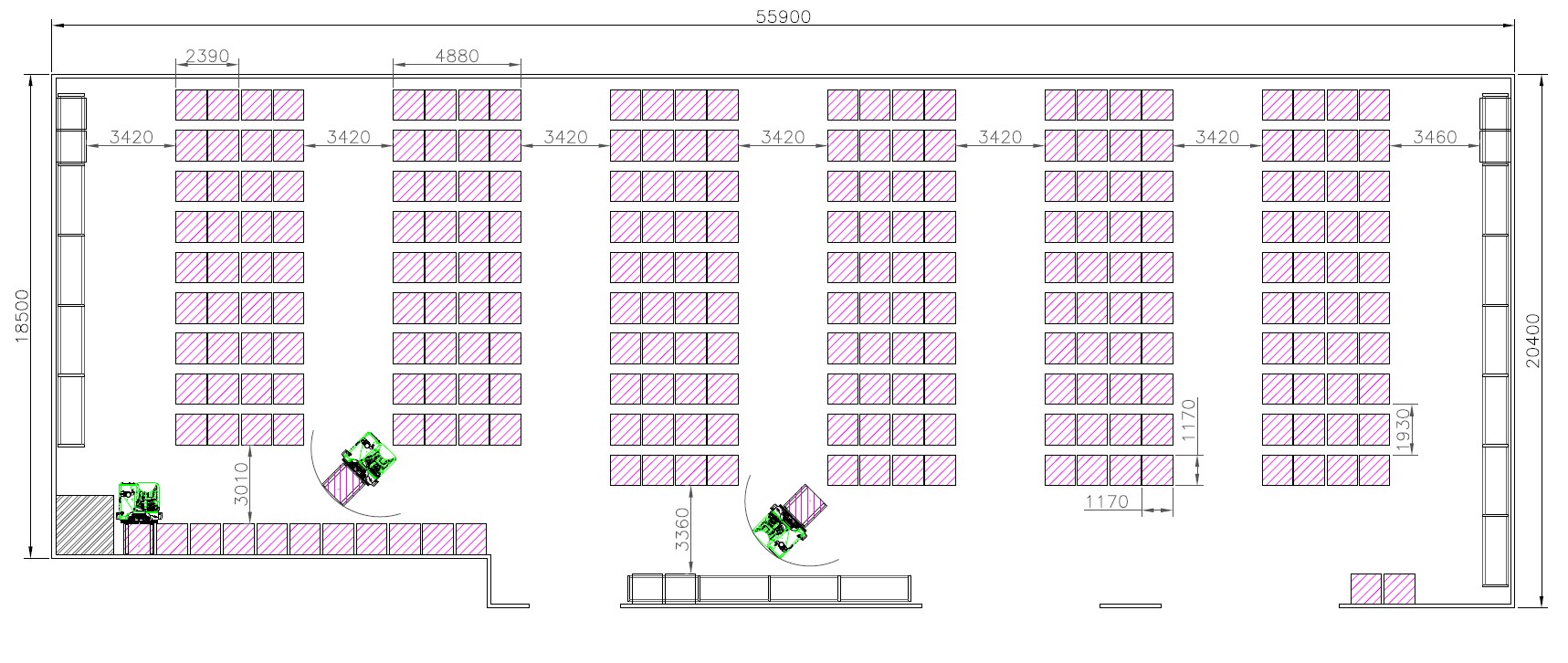
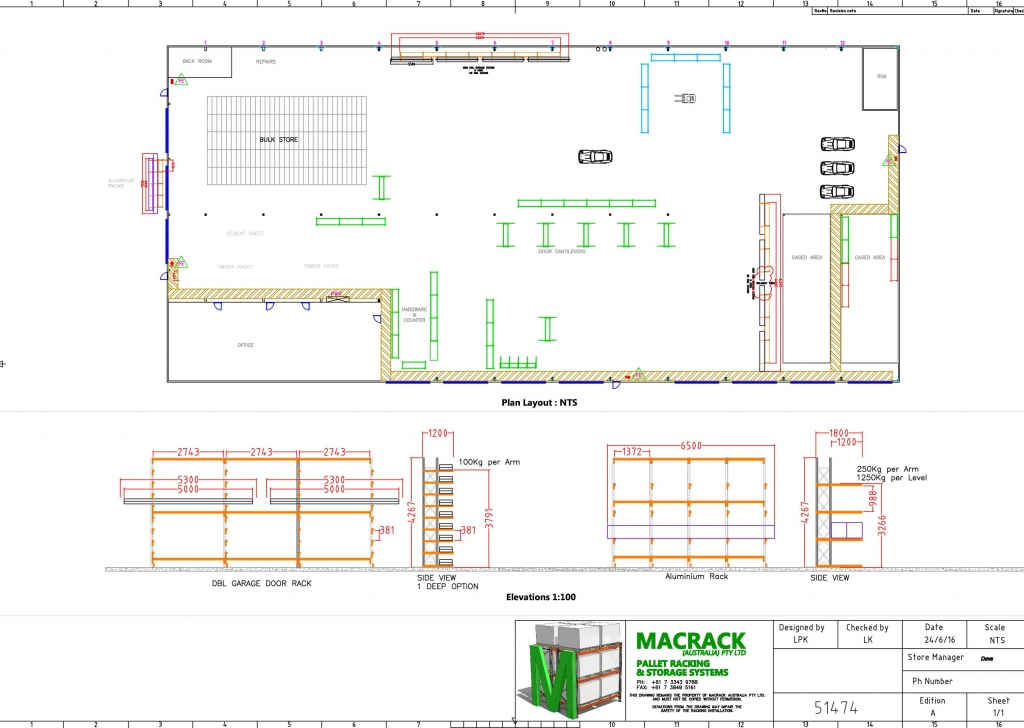
The objective is to optimize accessibility, reduce travel time during picking operations, and enhance overall operational efficiency. Designing a practical warehouse layout is a crucial process as it has a direct impact on the efficiency and productivity of your warehouse. The planned layout should arrange the processes in a logical sequence that can help streamline operations, boost productivity, and reduce expenses. A well-executed and optimized warehouse layout design can provide easy access to stored goods, minimize travel time, and improve order fulfillment rates. The layout of the warehouse is a visual representation of the physical space. A well-executed layout ensures efficient workflow, low operational costs, and workers' safety.
You must sketch the internal warehouse workflows and how each will relate to one another while conceptualising a warehouse layout design. The dock doors from which the carriers will drop off and pick up must also be planned. Optimizing warehouse layout successfully enables organisations to cut back on operational time. Every process step, from acquiring inventory to shipping the finished goods, can be streamlined with assistance. Thanks to this, you will be able to manage the rising demands and adhere to strict deadlines. This is because larger businesses frequently have higher production volumes, and the I shape is helpful for its typical in-and-out workflow.
Top Factors to Consider While Designing Your Warehouse Layout
Your options for designing your warehouse layout may be limited by the bulk and inflexible nature of many conventional automation technologies, such as conveyor systems. This U-shaped warehouse house shows goods coming in, a storage area, work in progress workstations, offices, and a separate area for quality control. Designing a layout gives you a fair idea of what will work best for your business.
Cross-trained personnel can seamlessly transition between different operational roles, facilitating smooth adjustments during periods of layout reconfiguration or process shifts. Conducting regular safety audits ensures that safety measures remain effective and up-to-date. Audits involve a comprehensive review of safety protocols, equipment conditions, and adherence to established procedures.
$500M New York City Warehouse Complex Looms Large - Engineering News-Record
$500M New York City Warehouse Complex Looms Large.
Posted: Tue, 24 Jan 2023 08:00:00 GMT [source]
You also have the option to choose between parenting with major domestic and international carriers, regional parcel carriers, or a mix of all. Once you choose the right carriers to partner with, you can negotiate shipping rates and schedule pick-up times. Before you begin designing the layout of your warehouse, here are the four primary fulfillment processes to keep in mind. First of all, your warehouse should allow you and your team to fulfill your orders efficiently and accurately.
Place high-demand items in easily accessible zones to minimize picking time and increase overall order fulfillment speed. Conversely, products with lower demand can be stored in less accessible areas. U-Shaped – this warehouse floor plan is the most common because it is straightforward and makes picking and packing easy. A well-designed warehouse planning enables you to process orders efficiently and dramatically simplifies your operations.
Autostore emerges as a masterful puzzle solver in the warehouse automation landscape. This compact, grid-based system transforms the conventional notion of storage. Utilizing robots to traverse the grid and retrieve bins, Autostore optimizes storage density and accessibility, creating a dynamic interplay of robotics and modular storage. These automated devices traverse storage lanes, effortlessly transporting pallets to their designated locations. The beauty of pallet shuttles lies in their ability to operate within high-density storage configurations, optimizing pallet storage and retrieval with speed and precision. Continuous Improvement Strategies hinge on the establishment of robust feedback mechanisms that capture real-time insights from the individuals who navigate the intricacies of the warehouse daily.